

I Almost Got Blown Off a 14er: Camping and Climbing Mount Yale
I Almost Got Blown Off a 14er: Camping and Climbing Mount Yale
Mount Yale gave me a peaceful night beside a creek, a beautiful morning in the aspens, and the strongest wind I have ever experienced on a climb. For a while, this Colorado 14er felt like exactly the challenge I was hoping for. Then I got above treeline, and the mountain had other plans.
My goal is to climb all 58 Colorado 14ers, and Yale would be number 17. Three weeks earlier, I had started my season on Mount Massive’s alternate southwest route. That one kicked my butt. Going into Yale, I was hoping for challenging, not brutal.
The plan was simple: camp at Collegiate Peaks Campground just west of Buena Vista, get up early, and make the short drive to Denny Creek Trailhead. Having camp about a mile from the trailhead made that early start a whole lot easier.
Camping at Collegiate Peaks Campground
I headed west out of Buena Vista on County Road 306, the road toward Cottonwood Pass. Normally, I prefer dispersed camping. Campgrounds are not usually my first choice, especially when the neighboring sites are close together.
But Collegiate Peaks Campground won me over.
My site was beside the creek, with the sound of running water in the background and a little path leading down toward it. There was a separate area for the tent, a picnic table, a fire ring, and a good-sized bear box. The bathroom was nearby, too, which can be a plus depending on what you want from a campsite.
The sites were still relatively close to one another, so this was not the same experience as finding a secluded dispersed spot. But the creek made it feel peaceful, and I was genuinely surprised that such a nice location had been the last one available.
Reservations, fees, and one very clean bathroom
I booked only about five days to a week ahead of the trip, and that felt like pushing my luck. Walking around the campground, it looked like everything was reserved. If you want to stay here before climbing Mount Yale, I would reserve sooner rather than later.
At the time of my stay, a campsite cost $25 plus reservation fees. Reservations were available through the Recreation.gov website and app. There was also a first-come, first-served option, but I would not build my hiking plans around getting one. Check current availability and pricing before heading out.
Firewood bundles were available at the campground for $10. At first, that sounded a little pricey, but there was a decent amount of wood in each bundle. And when you are already out there, the convenience counts for something.
The biggest surprise might have been the vault toilet. It was possibly the cleanest one I have ever used. Everything was tidy, and it actually smelled fresh. That is not something I get to say about a vault toilet very often, so it definitely went in the campground’s plus column.
A Tent I Could Actually Stand Up In
Reactive Outdoor sent me an inflatable tent to try, and this trip was a good opportunity to set it up. If dealing with tent poles is your least favorite part of making camp, this is a pretty cool concept.
It took roughly seven minutes to inflate. The nice part was that I did not have to spend those seven minutes assembling poles. Once inflation was underway, I could work on the rest of camp or just relax.
The basic setup I used was straightforward:
- Make sure the valves on both sides are tightened before inflation.
- Have the power battery charged and ready.
- Insert the battery and press the power button.
- Let the tent inflate while finishing other camp tasks.
The tent was described as fitting 10 people, which was a little more capacity than I needed for a solo night. Still, I will take extra room over feeling cramped.
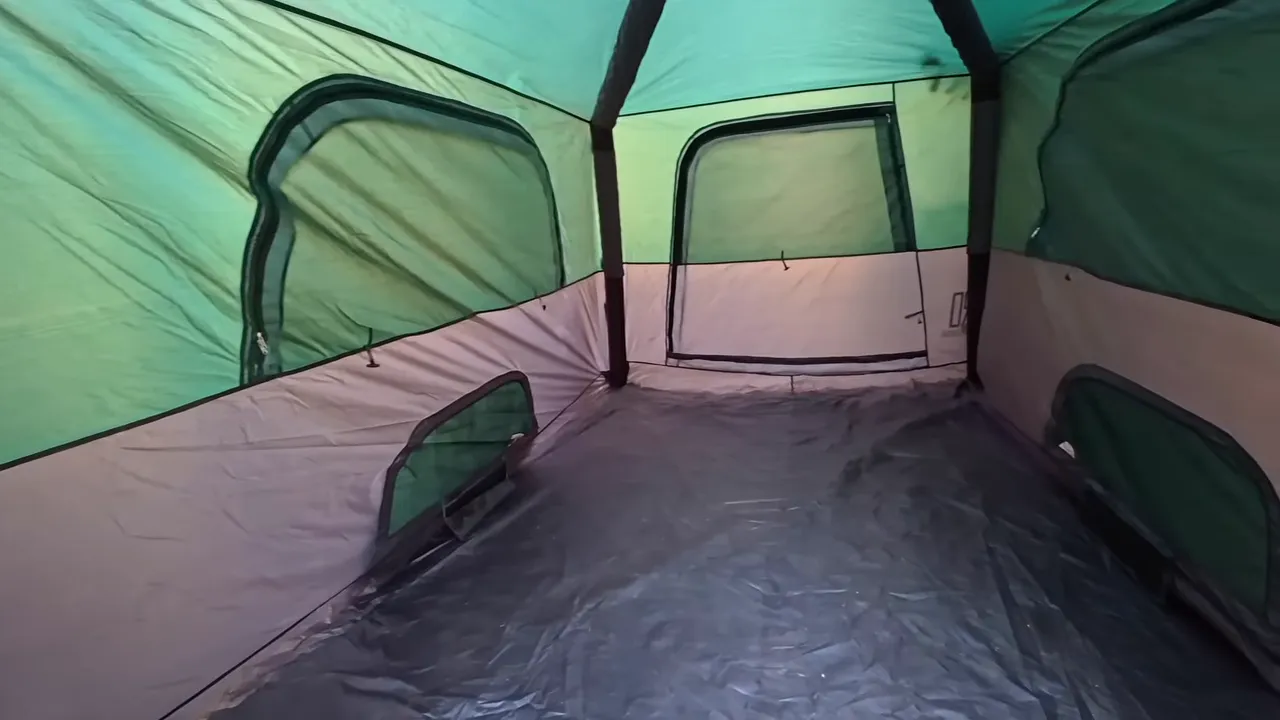
I hate feeling like I have to sit or crouch the entire time I am inside a tent. That gets old fast if rain sends you indoors or darkness arrives early. At 5 feet 10 inches tall, I could stand comfortably in this one. I estimated the peak height at around 6½ to 7 feet, though that was just my impression, not a measured specification.
Easy inflation and enough room to stand made for a comfortable camp setup. With the creek nearby and everything ready for the morning, I could settle in and think about the climb ahead.
A 5:30 a.m. Start at Denny Creek Trailhead
I arrived at Denny Creek Trailhead at 5:30 on a Monday morning. There were already a few people getting started, but parking was not a problem.
The main parking area had a decent number of spaces, and there was a small overflow area down the road. I would expect weekends to be much busier. An early weekday arrival worked well for me, but that is an account of this particular morning, not a guarantee of an open spot.
There was a bathroom at the trailhead, too. After the campground’s surprisingly excellent vault toilet, this one had a tough act to follow. It was usable, but nothing special. My highly unofficial rating: two and a half toilets out of five. It would do the job.
The trailhead information listed the climb to the summit as:
- Distance: 4.59 miles one way.
- Elevation gain: approximately 4,337 feet.
- Total climb: 4,422 feet.
- Final terrain: a Class 2 boulder field near the summit.
Those are the posted figures I noted before starting, rather than a recording of my own mileage. Either way, they make one thing clear: this is a substantial climb, not a casual walk through the woods.
The Lower Trail: Uphill First, Then a Little Breathing Room
Before the trip, I had heard descriptions of the trail starting flat before beginning to climb. My first thought after leaving the parking lot was, where exactly is that flat part?
There was uphill travel right from the start.
About a third of a mile in, the trail finally leveled out a little. I was happy to enjoy that section and give my body a chance to settle into the hike. It was a welcome break, even if it was not the flat beginning I had imagined.
The creek crossing and Mount Yale junction
Around a mile into the hike, I reached a little wooden bridge over the creek. It was one of those places worth slowing down for instead of treating it as another obstacle between the trailhead and summit.
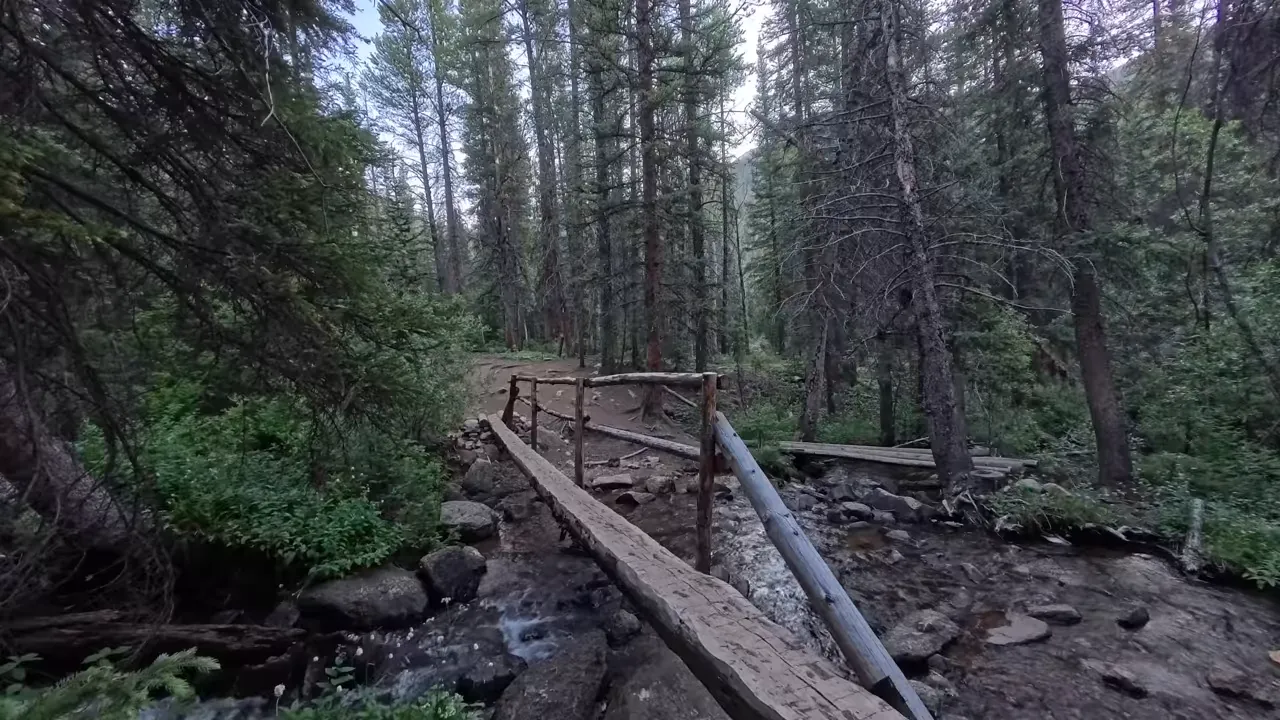
One thing I am trying to do more often is enjoy the journey rather than focus entirely on the destination. If something catches my attention, I want to stop and appreciate it. The creek was beautiful, and taking a moment there was part of the day, not a distraction from it.
Farther along, I reached the junction and took the right-hand trail toward Mount Yale. From there, the route continued through the forest, including a lovely stretch surrounded by aspens.
I kept thinking how incredible that section must look in the fall. On this morning, it was green, quiet, and full of birdsong and the sound of water.
I had seen roughly three people leave ahead of me at the trailhead, but for much of the lower hike I did not encounter anyone. It felt like I had the place to myself.
The Steady Climb Toward Treeline
At roughly two miles, everything was going pretty well. There were certainly inclines, but nothing felt overwhelming. Peaks were beginning to appear in the distance, although they still looked a long way off.
As I gained elevation, the mountain views opened up. The trail also became a more sustained climb, with stepped sections that kept sending me up and up.
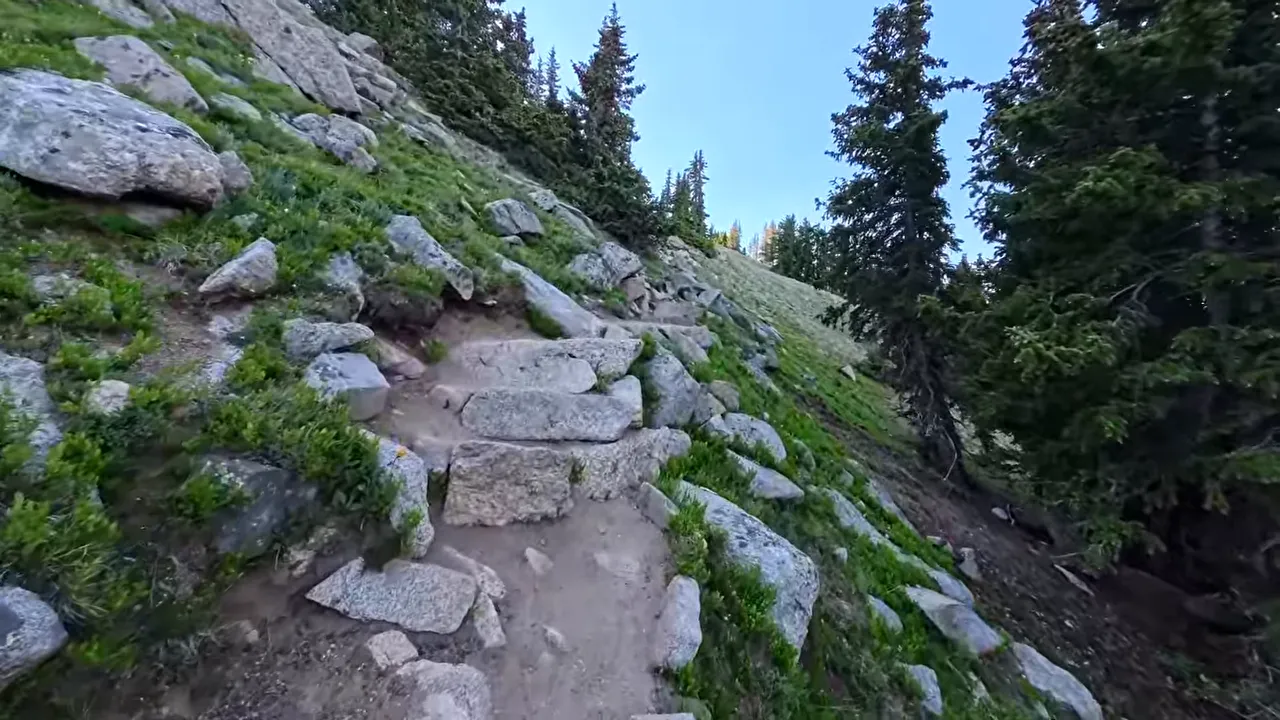
My approach was pretty simple: one step at a time.
None of the 14ers are easy. Yale was challenging, but through this section I never had that feeling of wondering whether I would ever get through it. Compared with how Mount Massive had felt at the start of the season, I was encouraged.
Then I finally emerged above treeline. The views were incredible, but there was still approximately 1,400 feet of elevation left to gain. The summit was not yet obvious to me, and the shelter of the forest was gone.
Above Treeline, the Wind Took Over
The higher I climbed, the colder and windier it became. What had started as a peaceful morning in the woods was turning into a very different kind of experience.
The upper trail followed a series of switchbacks toward the ridge. From there, the route continued along the ridge toward the summit. Looking up, I could make out the general direction, but I could not confidently point to the exact summit yet.
The wind did not let up.
On the final climb before reaching the ridge, it was howling. This was the strongest wind I had ever experienced on a mountain climb. The sunshine did not change the fact that I was cold and dealing with powerful gusts.
That contrast really stood out: beautiful blue sky, wide-open mountain views, and conditions that felt anything but comfortable.
The Final Class 2 Boulder Field
The last section was a Class 2 boulder field. The guidance I was working with was to stay to the right and look for cairns, the small stacks of rocks marking the route.
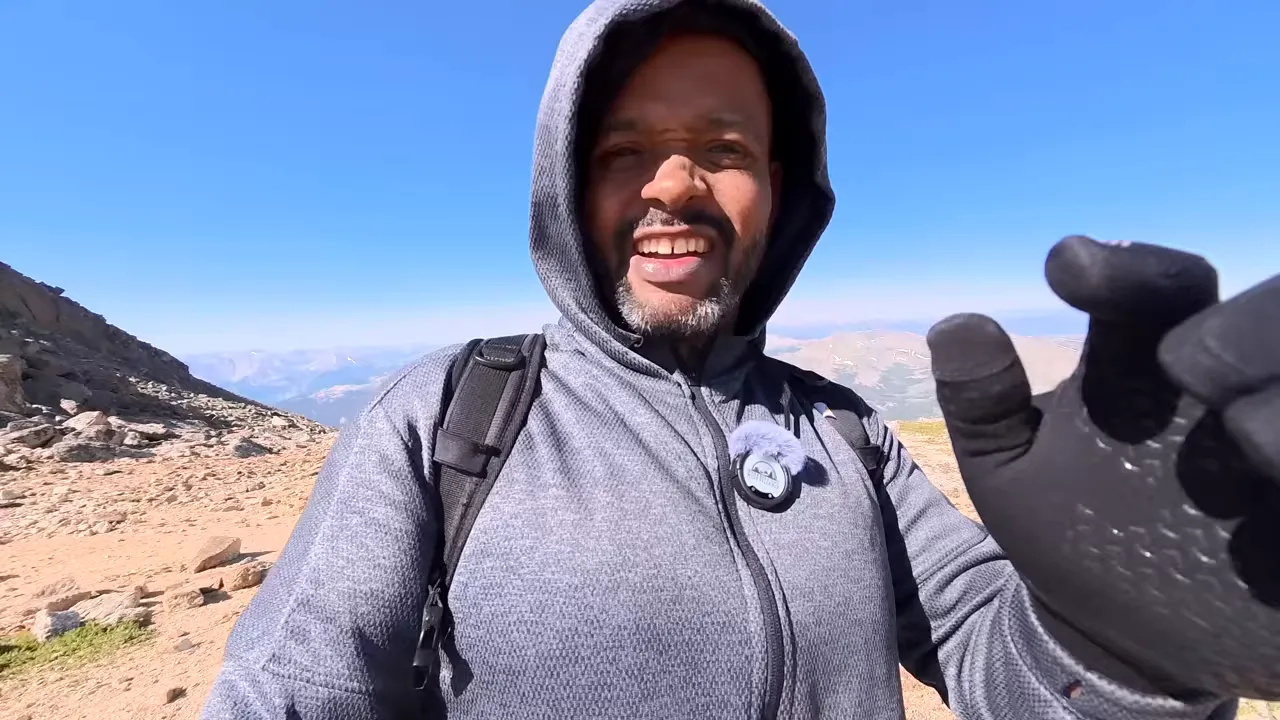
For a short stretch, the rocks blocked some of the wind. That was a huge relief. Other hikers told me there was a calmer place ahead where I could warm up in the sun, and that sounded pretty good at that point.
But the boulder field was longer than I expected.
I came back out into the wind, lost sight of the cairns, and ended up climbing across the boulders. That is how my final approach unfolded, not a route choice I would suggest copying. It was the part of the day when I was genuinely worried about being blown off the mountain.
The lower trail had felt manageable and peaceful. Up here, route-finding and the wind demanded a lot more attention.
Reaching Mount Yale’s Summit
Eventually, I reached the summit. I could not find the summit marker, so I assumed the sticks at the high point marked the spot.
Mount Yale became my 17th Colorado 14er. The climb had delivered the challenge I expected, along with a much wilder finish than I had bargained for.
I would absolutely recommend it as a beautiful hike. The creek, the aspens, the quiet forest, and the expanding mountain views all made the approach worthwhile. But my experience also showed how different the upper mountain can feel from the first couple of miles.
If I had to sum up the day, it would be this: enjoy the peaceful parts, take the sustained climb one step at a time, and do not mistake a pleasant morning below treeline for an easy finish above it.
The summit mattered, of course. So did the creekside camp, the little bridge, and those quiet moments in the woods. Those are the reasons I want to keep getting out there and knocking these mountains off the list.
|