

Mt. Belford and Mt. Oxford: My Hardest Colorado 14er Hike So Far
Mt. Belford and Mt. Oxford: My Hardest Colorado 14er Hike So Far
There’s a point on a steep climb when I start questioning my sanity. My legs are burning, I’m trying to catch my breath, and I remember that I chose to do this for fun.
Mt. Belford and Mt. Oxford gave me plenty of those moments. On my journey to climb all 58 Colorado 14ers, this was my hardest hike so far. Belford’s relentless switchbacks were brutal, and getting to Oxford meant dropping into a saddle and earning that elevation all over again.
But man, the views. And the feeling of making it to the top when my legs were absolutely gassed. That’s what keeps bringing me back.
A 5:15 A.M. Start With Weather in Mind
I started at 5:15 in the morning, earlier than I usually begin a hike. Normally, I like to get moving just as the sun is about to come up. This time, I had a long day ahead and the possibility of rain and thunderstorms around 1 or 2 in the afternoon.
The goal wasn’t just to reach both summits. I wanted to get back down below treeline before the weather picked up. That made the early start part of the plan, not just a chance to catch sunrise.
For the Belford and Oxford hike, the figures I was working with were:
- Distance: approximately 11 miles round trip.
- Elevation gain: approximately 5,900 feet.
- Belford to Oxford: approximately 1.5 miles each way.
- Adding Oxford: approximately 3 miles and 1,500 feet of elevation gain beyond a Belford-only hike.
Those numbers describe the Belford and Oxford route I discussed at the start. I ultimately chose a longer descent through Elkhead Pass, so they shouldn’t be treated as an exact mileage total for the route I finished.
Weather was a concern throughout the day. If you’re planning your own hike, the National Weather Service’s lightning safety guidance is worth reviewing. My aim was to leave the exposed high terrain early, but getting below treeline is not the same as reaching safe shelter.
Through Missouri Gulch to the Alpine Meadow
The first part of the trail was familiar. A few weeks earlier, I’d climbed Missouri Mountain from the same approach, so I had a pretty good idea of what the opening section would feel like.
It starts with steep switchbacks right off the bat. There’s no long, easy warm-up before the climbing begins. I worked through that first stretch in the dark, and by the time there was enough daylight to put the light away, I’d finished the initial steep climb. There was still more uphill ahead before reaching the meadow.
As the valley opened up, the early morning sunlight started hitting the peaks. You really can’t beat that light. It was a good reminder that the early alarm had benefits beyond giving me more time.
I also passed the area where I’d seen people camping on my previous trip. Nobody seemed to be there that morning, but it’s a spot backpackers had been using along the approach.
Eventually, I reached the trail junction: right toward Missouri Mountain, left toward Mt. Belford. I took the left branch and got a better look at what was waiting above me.
Belford looked intimidating. Crazy steep, honestly. Someone had described it to me as a StairMaster from hell, and from down there, that sounded about right.
Mt. Belford’s Relentless Switchbacks
Once I started up Belford, the hike got serious again. Switchback after switchback, the trail kept pulling me higher without giving my legs much of a break.
This was where the familiar conversation in my head started: Why am I doing this? Why is this my idea of a good time?
I know how that conversation usually ends. The climb hurts, but I’m almost always glad I did it. Still, knowing that doesn’t make the next uphill stretch feel any easier.
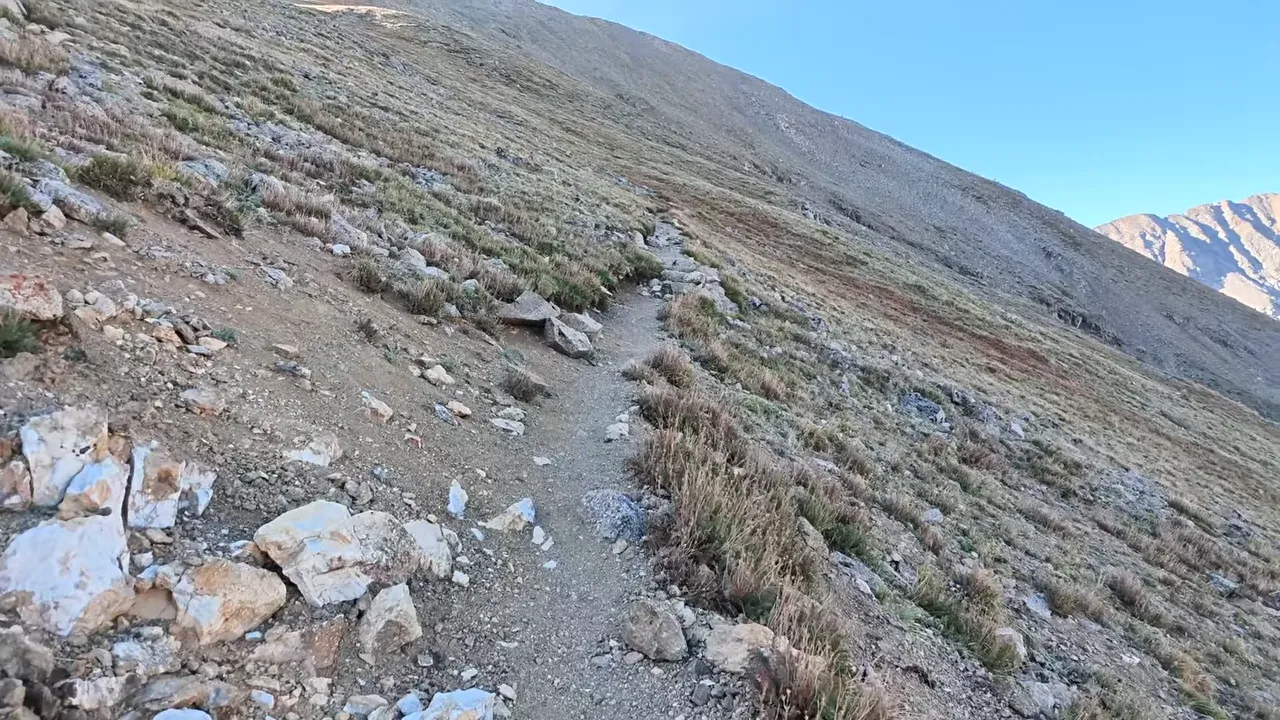
I stopped to catch my breath and looked back down the valley. That helped. From above, I could see how far I’d already climbed. When every step feels slow, it’s easy to focus only on what’s still ahead. Looking back gave me some credit for the work I’d already put in.
The footing also had me thinking about the trip down. This trail was steep and had loose gravel, and I’m not particularly sure-footed on that kind of descent. I tend to move slowly because I’m worried about slipping and falling.
During my Missouri Mountain hike, I’d spoken with someone who had done Belford and Oxford. He preferred descending through Elkhead Pass. He said it was longer distance-wise, but offered a gentler way down through the meadow instead of coming straight back down Belford’s steep trail.
The farther I climbed, the more appealing that sounded.
A False Summit, Then the Real Thing
At one point, I spotted a high point and thought it might be the summit. I wasn’t completely convinced, though. These mountains have a way of making you celebrate a little too early.
Sure enough, it wasn’t the top. The good news was that the actual summit was close.
I kept moving through the final stretch and finally made it onto Mt. Belford. That was number 21 of 58 on my Colorado 14er journey.
Man, that climb was steep. I was relieved to be up there, and I felt like I’d made halfway decent time. The views were beautiful, absolutely worth the suffering. But with Oxford still ahead and the weather window in mind, this wasn’t the place for a long break.
From Belford to Oxford: Down Before Up
Oxford is about 1.5 miles from Belford, but that distance comes with a catch: you descend into the saddle between the mountains before climbing again. Adding the second summit means more than simply walking along a ridge.
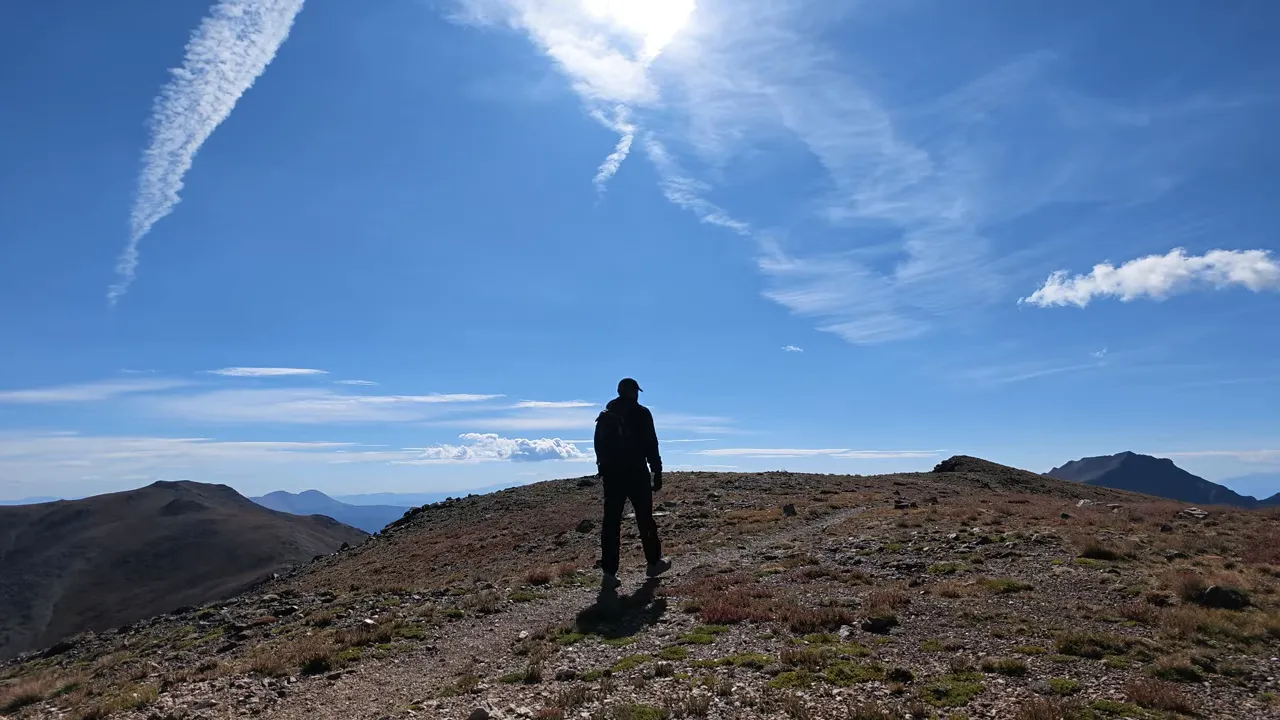
Near the bottom of the saddle, I met a couple who had come up through Elkhead Pass. I asked what that route was like, and they described it as much more relaxed than the direct Belford trail.
That settled the descent decision for me. I didn’t want to finish the day creeping down loose gravel, worrying about every step. A longer but gentler route sounded like a better fit for how I move downhill.
For a little while, I felt reinvigorated. I’d made Belford, I had a descent plan I felt better about, and Oxford was the next challenge.
Then the uphill caught up with me.
Reaching Oxford With Gassed Legs
The climb to Oxford kicked my butt. My legs were spent, and I started stopping frequently for little micro-breaks.
Those brief pauses became my way of working through the final climb. Stop, catch my breath, move again. I could see the summit, but seeing it and getting there were two very different things.
Eventually, I made it.
I’m not going to pretend I arrived feeling fresh. My legs were gassed. But I was glad I’d pushed through the physical challenge, and standing on Mt. Oxford felt completely worth the effort.
That’s a big part of why I’m doing this. It isn’t just about adding another mountain to a list. It’s about meeting the challenge in front of me and finding out what it takes to get through it.
Of course, the summit wasn’t the end of the work. I still had to climb back out of the saddle on the return. That thought was a little less exciting with tired legs.
Why I Chose Elkhead Pass for the Descent
I ultimately took Elkhead Pass back down into Missouri Gulch rather than descending Belford’s direct switchbacks, and I highly recommend considering that option.
For me, the trade-off made sense: more distance in exchange for a gentler descent. The steep, loose trail up Belford had already shown me what I didn’t want to spend the end of the day negotiating.
That’s a personal recommendation, not a claim that the longer route is automatically better for everyone. My comfort with footing mattered. So did the fact that a shorter route on paper can still take me a long time if I’m moving cautiously the whole way.
Belford and Oxford demanded a lot: an early start, a brutal first climb, another ascent after dropping into the saddle, and enough energy left to get back out. This was not an easy two-summit day.
But would I call it worth it? Absolutely. I questioned my sanity on the way up, wore my legs out getting to Oxford, and still came away glad I’d done it. Two more summits on the journey, and a very clear reminder that these mountains make you earn them.